
“Resentment is like drinking poison… and expecting the other person to die.”
If you’re wondering how to heal resentment, you’re not alone.
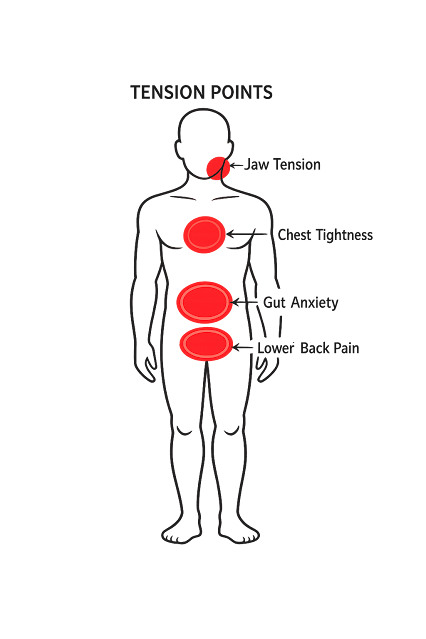
Understanding how to heal resentment starts with realizing that it is stored in the body, not just the mind. But have you felt it — really felt it — in your chest, your jaw, your stomach? Because resentment isn’t just an emotion. It’s a physical event that plays out in your body every single day it goes unresolved.
And the most painful part? The person who hurt you has most likely moved on. You’re the only one still paying the price.
How to Heal Resentment and Its Physical Effects
Most people think of resentment as something that lives in the mind. But when it’s left unresolved, it moves — deeply — into the body.
Research from Johns Hopkins confirms that chronic anger puts the body into a fight-or-flight mode, resulting in changes in heart rate, blood pressure, and immune response — increasing the risk of depression, heart disease, and diabetes. American Heart Association study
Here’s what’s actually happening in your system when you carry resentment
Nervous system: Your body stays in low-grade chronic stress. It never fully relaxes because the threat — in your subconscious — never fully resolved.
Hormonal disruption: Chronic resentment elevates cortisol production and has been linked to worse outcomes for diabetes, heart disease, chronic pain, and sleep problems.
Muscle tension: The jaw, neck, shoulders, and chest habitually contract. Over months and years, this becomes chronic pain with no apparent “physical” cause.
Digestive issues: The gut is deeply connected to emotional stress. Bloating, IBS, cramping, and acid reflux are common physical expressions of unresolved emotional weight.
Insomnia: Studies have found that forgiveness leads to improved sleep — which tells us clearly that resentment is one of the causes disrupting it.
Anxiety: Suppressing emotions over time leads to catastrophic thinking and resentment, which can become a slippery slope into PTSD, trauma, depression, and anxiety. Cleveland Clinic
This is not metaphor. This is your body holding information it doesn’t know how to release.
Why You Can’t Heal Resentment With Willpower Alone
Here’s what most people have tried: deciding to forgive. Telling themselves to move on. Journaling, meditating, talking it through. And yet — the body still tenses. The emotion still rises when the person’s name comes up.
Why?
Because the decision was made consciously. But resentment doesn’t live in your conscious mind.
Your subconscious — which controls more than 95% of your daily behavior, reactions, and physical responses — stores every unresolved experience as though it’s still happening. Resentment from old hurtful experiences can stay buried deep in memory for years, continuing to produce lasting pain and dysfunction. Psychology Today
Time passing doesn’t clear it. The subconscious doesn’t experience time the way your rational mind does. The wound from 10 years ago can be just as active energetically as something that happened last week.
Your amygdala — the brain’s threat-detection center — stays activated, keeping you in a state of perceived danger. Your prefrontal cortex struggles to regulate. Your brain treats unresolved resentment like an ongoing threat, keeping you stuck in fight-or-flight mode even when the person who hurt you isn’t around.
This is why the work has to happen at a deeper level, not just intellectually but at the root. Learning how to heal resentment requires working at the subconscious level, not just the conscious mind.
What Forgiveness Actually Means — And Doesn’t Mean
Let’s clear this up because it’s one of the biggest blocks people have.
Forgiving someone does NOT mean:
- What they did was acceptable
- You have to keep them in your life
- You were wrong
- You are weak
Forgiveness means: You stop letting that person and that moment occupy space in your nervous system, drain your energy, and keep your body in quiet emergency mode.
Forgiveness means a combination of acceptance and an intentional decision to let go of resentment and anger. It doesn’t mean forgetting or excusing the harm done — it brings a kind of peace that allows you to focus on yourself and move forward. Mayo Clinic
Forgiveness is an active process in which you make a conscious decision to let go of negative feelings whether the person deserves it or not. As you release the anger and hostility, you begin to feel empathy, compassion, and sometimes even affection for the person who wronged you.
You forgive to save yourself. Not them.

The Science: What Happens When You Release Resentment
Studies have found that forgiveness lowers the risk of heart attack, improves cholesterol levels and sleep, and reduces pain, blood pressure, and levels of anxiety, depression, and stress. Alaskabehavioralhealth
Research shows that forgiveness can relieve the effects of resentment, leading to greater peace of mind, recovery, and renewal. Psychology Today
When the emotional charge stored in the subconscious is genuinely released — not just intellectually decided, but cleared at the root — the body responds:
- Muscle tension releases
- Sleep deepens
- Anxiety softens without effort
- Digestion normalizes
- Energy returns
- Emotional reactions to old triggers dissolve
This is the difference between deciding to forgive and actually releasing the subconscious pattern that keeps the resentment alive in your body.
How 5D Therapy Works With Resentment at the Root
At 5D Therapy, we don’t ask you to talk endlessly about what happened. We don’t ask you to relive pain in detail or practice daily forgiveness exercises.
We work directly with the subconscious mind — accessing the stored emotional pattern at its exact root, releasing it, resetting the nervous system, and reprogramming a new response at the level where the original wound was stored.
When the root is removed, the symptom has no reason to exist. The body no longer needs to hold the tension, create the anxiety, or disrupt the sleep — because the information driving all of that has been cleared.
This is not a coping strategy. It’s a root-cause resolution.
You can explore the sessions in detail here and see what areas can be worked on.
➔ Instagram Video about Resentment
Signs You May Be Carrying Unresolved Resentment
Ask yourself honestly:
- Your body tenses when a specific person or memory comes to mind
- You feel tired without a clear physical reason
- Anxiety or irritability appear without an obvious trigger
- You replay certain conversations or events repeatedly
- Sleep is interrupted or shallow
- You have chronic pain or tension in the jaw, neck, chest, or gut
- You’ve tried to “let it go” but the emotion keeps returning
Any of these are signals from your body. They deserve attention — not suppression.
Frequently Asked Questions
Can resentment cause physical illness? Yes. Individuals who hold onto resentment are more likely to experience chronic pain, elevated blood pressure, immune disruption, and cardiovascular problems. The mind-body connection means emotional stress always eventually expresses physically. Mental Health
Does forgiving someone mean reconciling with them? No. Forgiveness doesn’t necessarily mean making up with the person who caused the harm. You can forgive completely and never speak to that person again. The work is internal, not relational.
Why can’t I let go of resentment even when I want to? Because resentment is stored in the subconscious, not just the conscious mind. Every time you ruminate, you strengthen the neural pathways that maintain the resentment. The pattern must be addressed at the level where it lives — the subconscious — not just through willpower or positive thinking.
How does 5D Therapy help with resentment? 5D Therapy accesses the subconscious directly to locate, release, and reprogram the emotional root of resentment — without needing to relive or analyze the experience in detail. Learn more about how it works here.
You Don’t Have to Keep Carrying This
The weight of resentment is not yours to carry forever. Learning how to heal resentment is not just a mental process, but a deeper subconscious shift. When you understand how to heal resentment, the body and mind begin to release what was never fully processed. One session can shift more than years of trying to forgive through willpower alone.
If you’re done carrying it and ready to let go — 5D Therapy is here.